Beta reads,
without the inbox.
BetaReadIt is where publishers and authors share unpublished manuscripts with beta readers, keep them protected, and get every note back in one place.
Press → to begin
By morning the frost had crept back over the orchard as if nothing at all had happened, but Mira carried the memory of that warmth like a coal in her chest, and she found she could not stop thinking about it through breakfast, through chores, through the long walk to the mill where she was meant to be delivering grain instead of secrets.
Corwin, to his credit, hadn’t told anyone. He fell into step beside her instead, hands stuffed in his coat pockets, and asked the question she’d been dreading since sunrise: “Your grandmother, did she ever teach you anything, before she left?”
“She left when I was six,” Mira said. “She taught me to braid my own hair and to never trust a merchant who won’t meet your eyes. That’s the whole inheritance.” It wasn’t entirely true. There had been a book, once, bound in bark-colored leather, that her mother had burned in the hearth the week after the funeral.
The millpond had frozen solid overnight, which should have been impossible in a season still two months from true winter, and the villagers who gathered at its edge spoke in the low, careful voices people use when they are trying very hard not to say the word cursed out loud.
Mira knelt at the pond’s edge and laid her palm flat against the ice, and for one dizzying moment she felt the same listening quality she’d found in the orchard roots, as if the whole valley had been holding its breath since her grandmother left, waiting for someone to finally ask it what was wrong.
“It’s spreading,” she said, and when she looked up, half the village was staring at her, and Corwin was already moving to stand between her and the miller, who had gone the particular shade of red that meant trouble was about to become personal.
That night, for the first time in eleven years, Mira went looking for the ashes of the burned book, not because she expected to find anything, but because she had run out of any other place to start.
The hearth had been swept a thousand times since that winter, but old houses keep their secrets in strange places, and Mira found three unburned pages wedged behind a loose stone at the back of the chimney, brittle as dead leaves and covered in her grandmother’s narrow, slanting hand.
The words made no sense at first, a recipe for frost, of all things, written like a lullaby, with instructions for a binding that needed a willing heart and an orchard’s worth of roots to hold it. It took her three readings to understand that her grandmother hadn’t cursed the orchard. She had built a cage, and put something inside it.
“What kind of something needs an entire orchard to hold it?” Corwin asked, reading over her shoulder with the particular fearlessness of someone who has not yet had reason to be properly afraid.
Mira didn’t answer, because the last line of the surviving page answered for her, in ink gone the color of rust: when the frost finally breaks, so will I, and I am sorry, my darling girl, for what you will have to do instead of me.
12The words made no sense at first, a recipe for frost, of all things, written like a lullaby, with instructions for a binding that needed a willing heart and an orchard’s worth of roots to hold it. It took her three readings to understand that her grandmother hadn’t cursed the orchard. She had built a cage, and put something inside it.
“What kind of something needs an entire orchard to hold it?” Corwin asked, reading over her shoulder with the particular fearlessness of someone who has not yet had reason to be properly afraid.
Mira didn’t answer, because the last line of the surviving page answered for her, in ink gone the color of rust: when the frost finally breaks, so will I, and I am sorry, my darling girl, for what you will have to do instead of me.
It took three days of arguing, sneaking, and one memorable bribe involving a jar of preserved cherries before Mira convinced Corwin to help her return to the orchard after dark, when the warmth under the oldest tree’s roots had, by her count, grown strong enough to be dangerous.
They dug until their hands bled, and what they found beneath the roots was not a monster, as Mira had half expected, but a door, small, iron-banded, sealed with a lock shaped like a sleeping fox, and radiating a cold so absolute it made the millpond’s ice feel like summer.
“Your grandmother didn’t cage a monster,” Corwin said slowly, running his fingers along the fox-shaped lock without quite touching it. “She caged herself.”
Mira had already guessed as much, somewhere in the silent, sinking part of her chest, but hearing it said aloud made the ground tilt under her feet, and for a moment the only thing holding her upright was Corwin’s hand, steady on her shoulder, and the terrible, familiar warmth climbing up through the soil to meet her.
The lock did not open for a key. It opened, as her grandmother’s page had warned her it would, for a willing heart pressed against cold iron, and Mira had exactly one night to decide whether she was willing to become whatever came next.
Corwin tried, three separate times, to talk her out of it, and three separate times she watched him lose the argument to his own better sense, because he had seen the ice on the millpond, and he understood, better than most nineteen-year-olds should have to, what happens to a valley when nobody answers a door that’s been knocking for eleven years.
When her palm finally touched the lock, the cold did not hurt the way she’d braced for. It felt, instead, like recognition, like the orchard’s roots, like the coal in her chest, like her grandmother’s voice finally close enough to hear the shape of, even if the words were still out of reach.
The door opened onto no monster and no ghost, but a garden, frozen mid-bloom, every flower made of glass and frost and eleven years of unspent grief, and standing at its center, exactly as young as the day she’d disappeared, Mira’s grandmother turned around, and smiled, and said, at last, “You found it. I knew you would.”
Mira had buried three winters in the orchard before she understood that the trees were listening. It was the fourth winter, kneeling in frost with her bare hands pressed to the roots of the oldest apple tree, that the ground finally answered her, not with words, but with warmth, spreading up through her wrists like a held breath finally let go.
Her grandmother had called it the Glass Orchard long before the frost took the color out of it, back when the trees still bore fruit that rang like struck crystal if you knocked two apples together. Nobody remembered why the frost had come, only that it arrived the same season her grandmother’s magic did, and left when it did not.
“You’re not supposed to be able to do that,” said a voice behind her, and Mira did not need to turn around to know it was Corwin, the miller’s son, who had a talent for finding her at the exact moment she least wanted to be found doing something reckless.
“I’m not doing anything,” she said, which was a lie, and they both knew it. The warmth was still climbing her arms, and somewhere under the frozen ground, something that had been asleep for a very long time was beginning, gently, to stir.
10The millpond had frozen solid overnight, which should have been impossible in a season still two months from true winter, and the villagers who gathered at its edge spoke in the low, careful voices people use when they are trying very hard not to say the word cursed out loud.
Mira knelt at the pond’s edge and laid her palm flat against the ice, and for one dizzying moment she felt the same listening quality she’d found in the orchard roots, as if the whole valley had been holding its breath since her grandmother left, waiting for someone to finally ask it what was wrong.
“It’s spreading,” she said, and when she looked up, half the village was staring at her, and Corwin was already moving to stand between her and the miller, who had gone the particular shade of red that meant trouble was about to become personal.
That night, for the first time in eleven years, Mira went looking for the ashes of the burned book, not because she expected to find anything, but because she had run out of any other place to start.
The hearth had been swept a thousand times since that winter, but old houses keep their secrets in strange places, and Mira found three unburned pages wedged behind a loose stone at the back of the chimney, brittle as dead leaves and covered in her grandmother’s narrow, slanting hand.
The words made no sense at first, a recipe for frost, of all things, written like a lullaby, with instructions for a binding that needed a willing heart and an orchard’s worth of roots to hold it. It took her three readings to understand that her grandmother hadn’t cursed the orchard. She had built a cage, and put something inside it.
“What kind of something needs an entire orchard to hold it?” Corwin asked, reading over her shoulder with the particular fearlessness of someone who has not yet had reason to be properly afraid.
Mira didn’t answer, because the last line of the surviving page answered for her, in ink gone the color of rust: when the frost finally breaks, so will I, and I am sorry, my darling girl, for what you will have to do instead of me.
11The millpond had frozen solid overnight, which should have been impossible in a season still two months from true winter, and the villagers who gathered at its edge spoke in the low, careful voices people use when they are trying very hard not to say the word cursed out loud.
Mira knelt at the pond’s edge and laid her palm flat against the ice, and for one dizzying moment she felt the same listening quality she’d found in the orchard roots, as if the whole valley had been holding its breath since her grandmother left, waiting for someone to finally ask it what was wrong.
“It’s spreading,” she said, and when she looked up, half the village was staring at her, and Corwin was already moving to stand between her and the miller, who had gone the particular shade of red that meant trouble was about to become personal.
That night, for the first time in eleven years, Mira went looking for the ashes of the burned book, not because she expected to find anything, but because she had run out of any other place to start.
The hearth had been swept a thousand times since that winter, but old houses keep their secrets in strange places, and Mira found three unburned pages wedged behind a loose stone at the back of the chimney, brittle as dead leaves and covered in her grandmother’s narrow, slanting hand.
The words made no sense at first, a recipe for frost, of all things, written like a lullaby, with instructions for a binding that needed a willing heart and an orchard’s worth of roots to hold it. It took her three readings to understand that her grandmother hadn’t cursed the orchard. She had built a cage, and put something inside it.
“What kind of something needs an entire orchard to hold it?” Corwin asked, reading over her shoulder with the particular fearlessness of someone who has not yet had reason to be properly afraid.
Mira didn’t answer, because the last line of the surviving page answered for her, in ink gone the color of rust: when the frost finally breaks, so will I, and I am sorry, my darling girl, for what you will have to do instead of me.
8The lock did not open for a key. It opened, as her grandmother’s page had warned her it would, for a willing heart pressed against cold iron, and Mira had exactly one night to decide whether she was willing to become whatever came next.
Corwin tried, three separate times, to talk her out of it, and three separate times she watched him lose the argument to his own better sense, because he had seen the ice on the millpond, and he understood, better than most nineteen-year-olds should have to, what happens to a valley when nobody answers a door that’s been knocking for eleven years.
When her palm finally touched the lock, the cold did not hurt the way she’d braced for. It felt, instead, like recognition, like the orchard’s roots, like the coal in her chest, like her grandmother’s voice finally close enough to hear the shape of, even if the words were still out of reach.
The door opened onto no monster and no ghost, but a garden, frozen mid-bloom, every flower made of glass and frost and eleven years of unspent grief, and standing at its center, exactly as young as the day she’d disappeared, Mira’s grandmother turned around, and smiled, and said, at last, “You found it. I knew you would.”
Her grandmother had called it the Glass Orchard long before the frost took the color out of it, back when the trees still bore fruit that rang like struck crystal if you knocked two apples together. Nobody remembered why the frost had come, only that it arrived the same season her grandmother’s magic did, and left when it did not.
“You’re not supposed to be able to do that,” said a voice behind her, and Mira did not need to turn around to know it was Corwin, the miller’s son, who had a talent for finding her at the exact moment she least wanted to be found doing something reckless.
“I’m not doing anything,” she said, which was a lie, and they both knew it. The warmth was still climbing her arms, and somewhere under the frozen ground, something that had been asleep for a very long time was beginning, gently, to stir.
By morning the frost had crept back over the orchard as if nothing at all had happened, but Mira carried the memory of that warmth like a coal in her chest, and she found she could not stop thinking about it through breakfast, through chores, through the long walk to the mill where she was meant to be delivering grain instead of secrets.
Corwin, to his credit, hadn’t told anyone. He fell into step beside her instead, hands stuffed in his coat pockets, and asked the question she’d been dreading since sunrise: “Your grandmother, did she ever teach you anything, before she left?”
“She left when I was six,” Mira said. “She taught me to braid my own hair and to never trust a merchant who won’t meet your eyes. That’s the whole inheritance.” It wasn’t entirely true. There had been a book, once, bound in bark-colored leather, that her mother had burned in the hearth the week after the funeral.
The mill wheel turned behind them, groaning against ice that shouldn’t have formed this early in the season. Corwin glanced back at it, frowning, and Mira felt the coal in her chest flare warmer, as if it, too, had noticed something wrong.
The millpond had frozen solid overnight, which should have been impossible in a season still two months from true winter, and the villagers who gathered at its edge spoke in the low, careful voices people use when they are trying very hard not to say the word cursed out loud.
7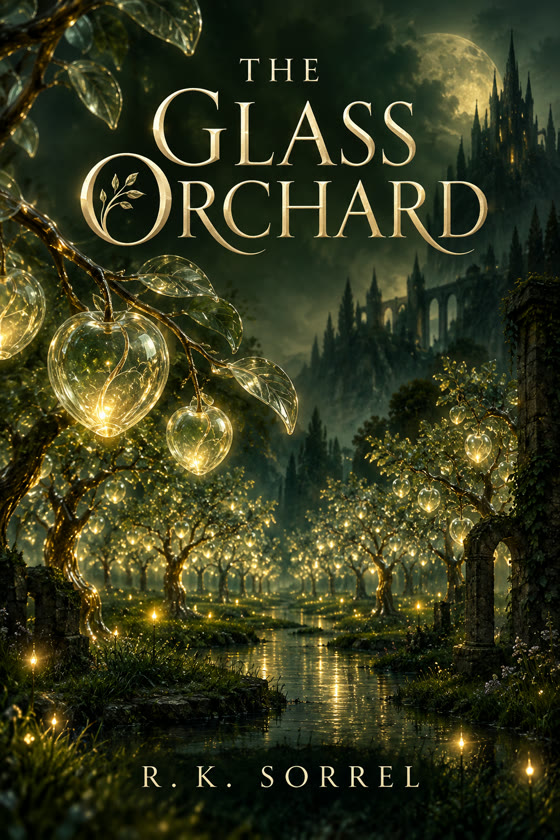
Mira had buried three winters in the orchard before she understood that the trees were listening. It was the fourth winter, kneeling in frost with her bare hands pressed to the roots of the oldest apple tree, that the ground finally answered her, not with words, but with warmth, spreading up through her wrists like a held breath finally let go.
Her grandmother had called it the Glass Orchard long before the frost took the color out of it, back when the trees still bore fruit that rang like struck crystal if you knocked two apples together. Nobody remembered why the frost had come, only that it arrived the same season her grandmother’s magic did, and left when it did not.
“You’re not supposed to be able to do that,” said a voice behind her, and Mira did not need to turn around to know it was Corwin, the miller’s son, who had a talent for finding her at the exact moment she least wanted to be found doing something reckless.
“I’m not doing anything,” she said, which was a lie, and they both knew it. The warmth was still climbing her arms, and somewhere under the frozen ground, something that had been asleep for a very long time was beginning, gently, to stir.
The mill wheel turned behind them, groaning against ice that shouldn’t have formed this early in the season. Corwin glanced back at it, frowning, and Mira felt the coal in her chest flare warmer, as if it, too, had noticed something wrong.
The lock did not open for a key. It opened, as her grandmother’s page had warned her it would, for a willing heart pressed against cold iron, and Mira had exactly one night to decide whether she was willing to become whatever came next.
Corwin tried, three separate times, to talk her out of it, and three separate times she watched him lose the argument to his own better sense, because he had seen the ice on the millpond, and he understood, better than most nineteen-year-olds should have to, what happens to a valley when nobody answers a door that’s been knocking for eleven years.
When her palm finally touched the lock, the cold did not hurt the way she’d braced for. It felt, instead, like recognition, like the orchard’s roots, like the coal in her chest, like her grandmother’s voice finally close enough to hear the shape of, even if the words were still out of reach.
The door opened onto no monster and no ghost, but a garden, frozen mid-bloom, every flower made of glass and frost and eleven years of unspent grief, and standing at its center, exactly as young as the day she’d disappeared, Mira’s grandmother turned around, and smiled, and said, at last, “You found it. I knew you would.”
11One home for the beta read. For everyone in it.
The manuscript goes in once. Readers read it in the app. Every note, answer and reading signal comes back to the people who need it.
Beta reading still
runs on inboxes.
Chapters go out as attachments, notes come back in five formats, and nobody knows who actually finished. These are the questions we kept hearing.
Every project. At a glance.
One home for the whole list, so the morning check takes a minute.
- Each manuscript with its reading progress, readers, notes and reports.
- How the chapters landed: star ratings per chapter, the most-annotated chapters and the most-reported passages.
Straight from Word.
Upload the file you already have. It arrives split into chapters, ready to read.
- Text manuscripts, illustrated books and comics.
- Readers open it in the app. No attachments travel by email.
Choose who reads what. Know who finished.
- Assign each manuscript to the readers you pick.
- Chapter by chapter: how far each reader got, minutes spent and their rating.
- Chapters read too fast for that reader's own pace are flagged, so a skim never passes as a read.
Members only
Where manuscripts meet their first readers.
- A private space, open only to signed-in readers and teams.
- Post a reading call and let readers apply, or search them by genre, language, age group and more.
- Every reader carries a reliability level, earned from verified completions. A trust signal, not a rating.
Made for the people who read your book.
A beta read is a favour. Here is how we make it an easy one.
 Free for readers, always. Authors pay for capacity, readers never pay.
 Easy on the eyes. Five themes, seven fonts, size, spacing and margins, on phone, tablet or laptop.
 Picks up where they stopped. Continue reading reopens the page they left.
 Notes on the exact words, with quick tags. No attachments, no email.
 A level for finishing. From New Reader to Beta Champion.
Reader levels
 New Reader
 Rising Reader
 Reliable Reader
 Trusted Reader
 Proven Reader
 Beta Champion
Earned by finishing, not by rating. Authors see it, readers keep it.
Bring your team. Decide who can do what.
Organisation
Each manuscript
See the book the way your readers marked it.
- Readers highlight and leave notes on the exact words, with quick tags like pacing, dialogue or unclear.
- Every mark sits on the manuscript itself, with the conversation beside it.
- Illustrated books and comics too: notes pin to the spot on the page, with a heatmap.
Feedback you can actually use.
- Every note in one queue, filtered by reader, chapter or type.
- A Waiting for your reply filter shows which readers are still waiting on you.
- Reply and Resolve on the note itself. One click opens it in context.
Take it back to  Word.
Export a .docx with every reader's note as a real Word comment, right next to the line it belongs to.
- Choose open notes only or all feedback.
- Edit in the tool your editors already use.
One survey at the end of the book. Every answer in one place.
Write your own questions once. Readers answer when they finish, and the replies land in Feedback, next to their notes.
Which draft was the good one? Now you know.
- Version history shows what readers see live. Make any earlier version live again.
- Compare two versions and see exactly which chapters changed.
Reading stays protected. Never downloadable.
- Readers accept a confidentiality agreement before they open any manuscript.
- No download button. Copy, print and right-click are switched off while reading.
- Every page carries a quiet watermark: the reader’s masked email and the time.
Like a Kindle, but better.
Readers set the page up the way they like to read. Then every note they leave lands with you.
- 5 themes, from paper to night
- 7 fonts, size from 12 to 30 px
- Line spacing, margins, alignment
- Page brightness, scroll or paged
Read. Review. Manage. Anywhere.
Laptop, tablet or phone. Readers pick up where they stopped, and the team works from the same place.
Available soon onApp StoreGoogle Play
Start free. Grow when you’re ready.
Free
$0
Start hereTry your first beta read
- 1 active manuscript
- 5 readers
- 1 feedback round
Author
$9/month
Run a complete beta read
- 1 active manuscript
- 25 readers
- 3 feedback rounds
- Export to Word
Pro
$15/month
Manage multiple books and feedback rounds
- 5 active manuscripts
- 100 readers
- 3 team seats
- Unlimited rounds
- Word export, version comparison
Publisher
$49/month
Manage titles, teams and readers at scale
- Up to 25 active manuscripts at a time
- 250 readers
- 10 team seats
- Unlimited rounds
- Everything in Pro
Pay yearly, get two months free. Prices in USD. Beta readers always read for free. Bigger than that? Custom plans are built around your organisation.
16Let’s build it with you.
Three ways to start working together.
Let’s talk.
Early partner programme
Run real beta reads on a few of your titles before launch, with a direct line to our team.
- Real titles, real readers
- A direct line to the team
- You shape the roadmap
- Founding terms, locked in
A plan built around you
Sized to your list, your readers and your team.
- Scoped to your list
- Roles for the whole team
- Bring readers or find them
- Set up around your workflow
Partnerships
If you bring readers, books or tools together, there’s probably a fit. Let’s find it.
- Reader communities
- Imprints and platforms
- Integrations
- Launches we shape together
Before you publish,